
-
Translate
 TH
TH EN
EN JP
JP CN
CN
TH EN JP CNSpur gears have been a core part of manufacturing machinery for many years. With straight teeth aligned parallel to the shaft, they are simple, reliable, and effective at transmitting power and handling torque. Because of these qualities, spur gears remain widely used across many industrial applications.
This article explores the role of Industrial Gears in modern manufacturing, starting with how spur gears work and moving on to how they are applied in today’s advanced production technologies.
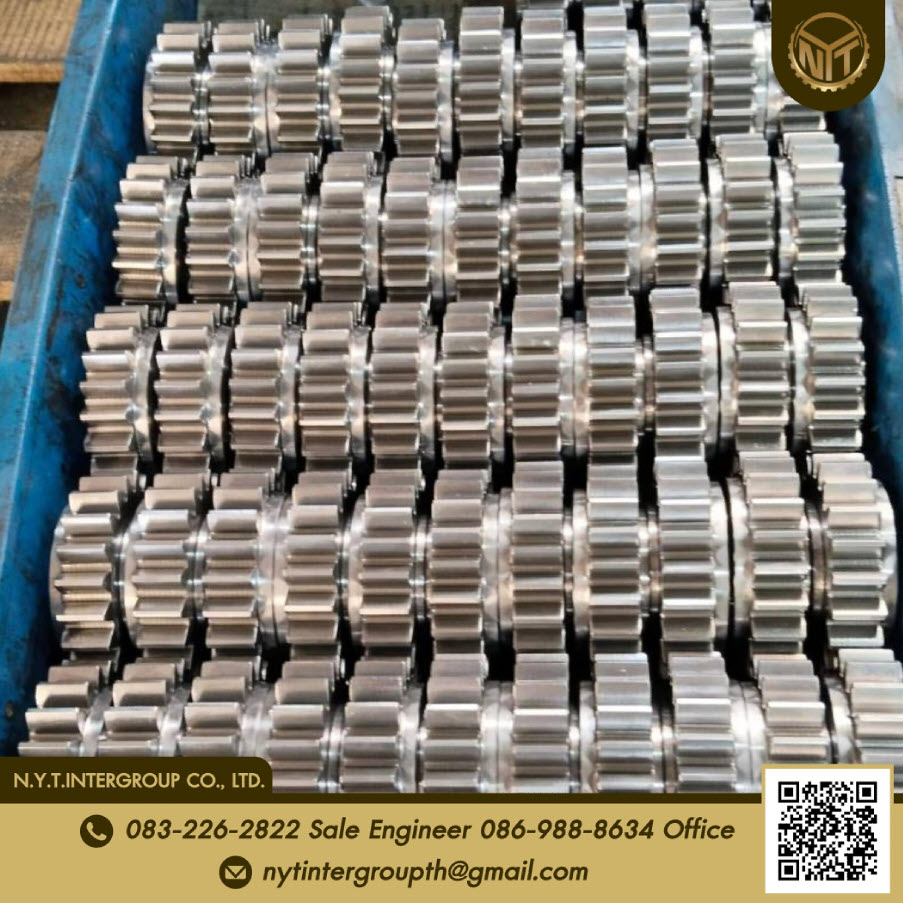
Spur Gears are one of the simplest and most commonly used gear types in industrial machinery. Their straight teeth run parallel to the shaft, allowing them to transmit motion and power efficiently between parallel shafts. Because of this straightforward design, spur gears are easy to understand, reliable, and widely used across many industries.
The way spur gears work is quite simple. When one gear turns, its teeth mesh directly with the teeth of another gear. This contact transfers force and rotational speed from the driving gear to the driven gear, allowing power to move from the source to the machine or component that needs it.
One of the main strengths of these industrial gears is their ability to handle relatively high torque. The contact between the gear teeth spreads the load evenly, which helps reduce stress and wear. At the same time, their simple structure makes spur gears more cost-effective to manufacture compared to more complex designs such as helical or bevel gears.
Another important advantage is efficiency. When properly designed and manufactured, spur gears can achieve power transmission efficiencies of around 98–99%, meaning very little energy is lost during operation. This makes them a solid choice for systems where energy efficiency is important.
Material selection plays a major role in determining both the performance and service life of spur gears. Commonly used materials include steel, cast iron, brass, and engineering plastics such as nylon or PEEK. Steel is well known for its high strength and is ideal for heavy-duty applications, while plastic gears offer advantages such as lighter weight, quieter operation, and suitability for lower-load environments. Ultimately, the right material choice depends on operating conditions, load requirements, and expected performance.
Design parameters such as module, number of teeth, and face width also have a significant impact on how a spur gear performs. A well-designed gear helps reduce noise, limit vibration, and extend operational life. Today, CAD and CAM technologies are widely used to design and analyze spur gears with a high level of accuracy, ensuring they meet specific application requirements before production begins.
For engineers and manufacturing professionals, understanding how spur gears work—and what factors influence their performance—is essential. This knowledge enables better decisions when selecting or designing power transmission systems that deliver reliable operation, long service life, and energy efficiency in industrial machinery.
In modern manufacturing, spur gears play a critical role in driving a wide range of machinery, from large industrial equipment on factory floors to smaller systems used in everyday applications. Their importance goes far beyond being simple mechanical components; spur gears contribute directly to efficiency, precision, and reliability throughout production processes.
In the automotive industry, industrial gears are essential to power transmission systems in cars and motorcycles. They are commonly found in gearboxes, steering systems, and various auxiliary mechanisms. Modern vehicle performance relies heavily on precisely manufactured spur gears to ensure smooth power transfer, minimize mechanical wear, and improve overall fuel efficiency.
Agricultural machinery also depends heavily on spur gears. Equipment such as tractors, combine harvesters, and other farming machines must operate under demanding conditions, including heavy loads, dust exposure, and long operating hours. Thanks to their strength and ability to handle high torque, industrial gears help these machines remain reliable and durable over time.
The aerospace and aviation industries place even higher demands on gear performance. Spur gears used in aircraft engines and control systems are produced from specialized materials and subjected to rigorous testing. They must withstand extreme forces, constant vibration, and rapid temperature changes while maintaining absolute reliability.
In robotics and automation, spur gears are essential for precise motion control. Industrial robots rely on highly accurate gears to perform repetitive movements with consistency, which is critical for maintaining product quality in automated production lines.
Spur gears also play a vital role in renewable energy systems, particularly wind turbines. In these applications, gears convert the slow rotational speed of turbine blades into higher speeds suitable for electricity generation. This requires large, durable spur gears capable of handling high torque over long operating periods.
Advancements in manufacturing technologies—such as high-precision CNC machining and 3D printing—have further improved spur gear production. These technologies allow manufacturers to produce smaller, more complex gears with greater accuracy, supporting industries like electronics and medical devices that demand extremely precise components.
Ongoing research in materials science and gear manufacturing continues to enhance gear performance. Improvements in strength, wear resistance, and high-temperature capability make modern spur gears increasingly suitable for demanding industrial environments.
Selecting the right spur gear for industrial applications directly affects system performance, reliability, and service life. Careful evaluation of key factors helps ensure the gear matches real operating conditions while minimizing maintenance and downtime.
Torque and power requirements should be considered first. Understanding the maximum load the system must handle is essential. Undersized gears may fail under stress, while oversized gears can add unnecessary cost and complexity without providing real benefits.
Operating speed is another critical factor. Spur gears running at high speeds require precise design and manufacturing to reduce vibration and noise. Pitch line velocity should also be evaluated to determine suitable lubrication methods and cooling requirements.
Material selection has a major influence on durability and performance. The chosen material must match load conditions, wear levels, impact forces, and operating temperature. For heavy-duty applications, hardened or heat-treated steels—such as surface-hardened or nitrided steel—are often preferred for their superior strength and wear resistance.
Manufacturing accuracy is especially important in precision applications. High-quality spur gears operate more smoothly, generate less noise, wear evenly, and last longer. International standards such as AGMA or DIN provide valuable guidance on accuracy levels suitable for different industrial uses.
The working environment should also be carefully considered. In humid or chemically aggressive conditions, corrosion-resistant materials like stainless steel or engineering plastics may outperform standard steels. High-temperature applications may require specialized heat-resistant materials to maintain reliability.
Lubrication requirements further influence gear design and material choice. Systems may use oil bath lubrication, spray lubrication, or grease, each with different performance implications. In some cases, certain plastic spur gears can operate with minimal or even no lubrication, simplifying maintenance.
Finally, cost should be evaluated from a long-term perspective. While high-quality spur gears may have a higher initial price, they often deliver better value through longer service life, fewer failures, and reduced maintenance costs. Considering total cost of ownership—rather than just purchase price—leads to smarter, more sustainable investment decisions.
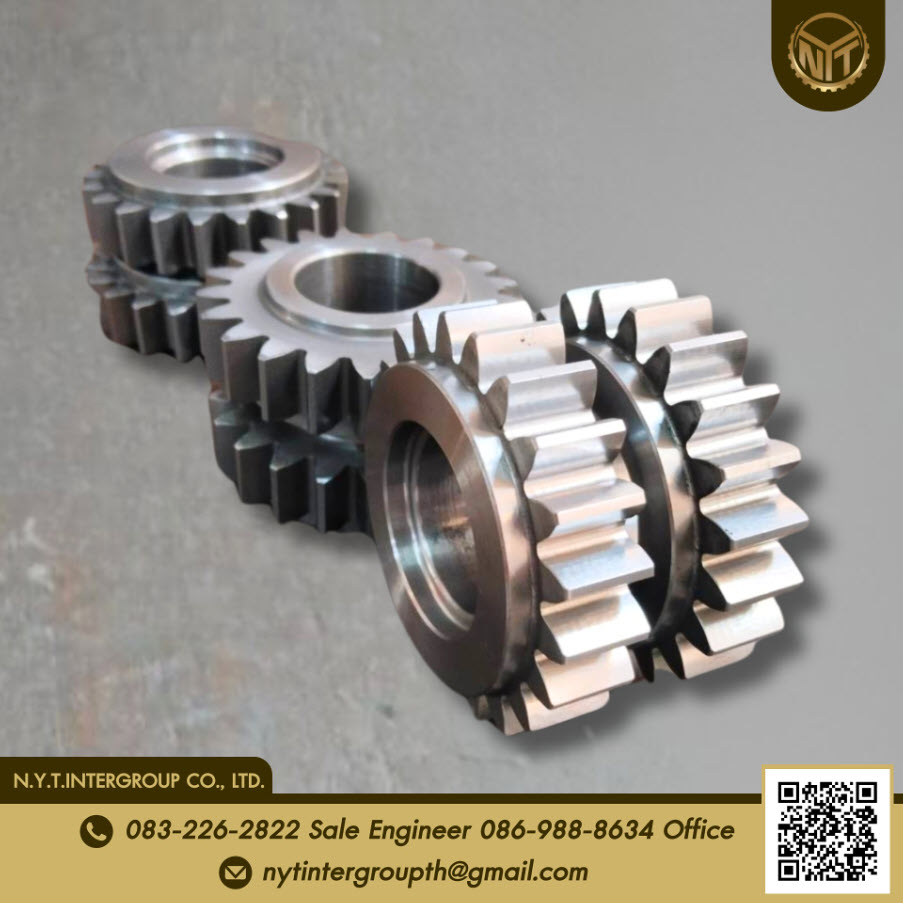
Spur gears remain essential components across many manufacturing industries. With straight teeth aligned parallel to the shaft, they are valued for their simplicity, reliability, and high power transmission efficiency—often reaching 98–99%. Their straightforward design allows them to handle high torque, maintain reasonable production costs, and be manufactured from a wide range of materials.
Because of these advantages, spur gears are widely used in automotive, agricultural, aerospace, robotics and automation, and renewable energy industries. From heavy-duty machinery to precision systems, they continue to play a key role in modern manufacturing.
Choosing the right spur gear involves balancing factors such as torque, speed, material, accuracy, environment, lubrication, and lifecycle cost. When these elements are properly considered, spur gears deliver reliable performance, extended service life, and reduced maintenance demands.
Ongoing advances in manufacturing technology and materials science continue to expand the capabilities of spur gears, making them even more versatile and valuable for today’s industrial challenges.
NYT Intergroup Co., Ltd. manufactures spur gears in both standard factory specifications and fully customized designs. Our gears are suitable for a wide range of machinery—from light-duty equipment to heavy industrial systems. Produced using high-precision CNC machinery and durable materials, our spur gears offer long service life and consistent quality, whether for small batches or large production volumes.
Interested in learning more
Contact us at +668 3226 2822